
Three books. One principle.
Value = Action × Response. Start with the book that fits where you are: the executive case, the strategy, or the hands-on field guide.
BOOK 1 · THE EXECUTIVE STARTING POINT
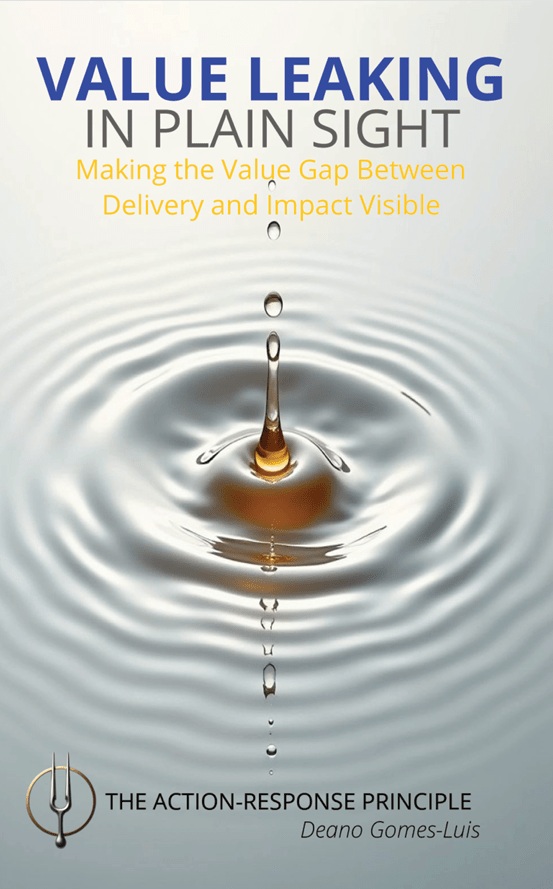
Value Leaking in Plain Sight
Value Leaking in Plain Sight shows how engagement, trust and momentum can drain away while every performance metric looks healthy, a pattern the book calls the Silent Spiral. Through everyday stories, from a banana cake to a polished town hall that left its audience cold, and the Telco-X case study, it names the gap between what an organisation delivers and the impact it actually has, and introduces the Action-Response Principle as a simple way to see that gap and close it.
Inside the book
The Preface names the Silent Spiral and introduces ARP. Chapter 1, Death by a Thousand Cuts, shows how value leaks, drawing on stories and evidence such as the finding that 70% of engagement is tied to managers. Chapter 2, The Equation You’ve Always Felt, introduces the ARP formula through the Telco-X project. Chapter 3, How It Becomes Real, explains how ARP shifts mindsets and systems. Chapter 4, But What About…, answers the common objections with practical examples, including Samira’s healthcare team. Chapter 5, You’ll Never See Business the Same Way Again, draws the lens together, and Chapter 6, What Happens Next, gives you the Walkabout exercise to find the leaks in your own organisation. Reflection prompts throughout help you apply each idea as you read.
BOOK 2 · THE STRATEGIC FOUNDATION
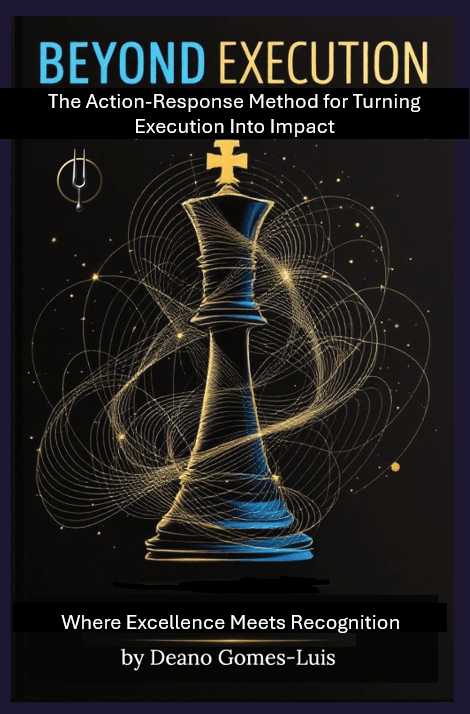
Beyond Execution
Beyond Execution sets out the Action-Response Principle as a complete system: Value = Action × Response. Using the Telco-X case study, it shows how strong delivery measured against the wrong signals led to customer churn, and gives leaders the tools to prevent it, including the ARP Scorecard and Customer Value Mapping. It moves from recognising the problem to aligning strategy, and explains how ARP takes hold through mindset, belief, behaviour and culture.
Inside the book
Chapters 1 to 6 establish why execution alone does not create value, introduce the ARP formula and the Value Cycle, and show how to measure Action and Response separately. Chapters 7 to 9 cover scoring, attunement and advanced capabilities. Chapters 10 to 12 provide practical tools, including the ARP Blueprint, alongside the full Telco-X case study. Chapter 13 connects ARP to wider systemic change, and the appendices show how it works with frameworks you may already use, such as OKRs. Pair it with Making It Land to take the principles into practice.
BOOK 3 · THE FIELD GUIDE
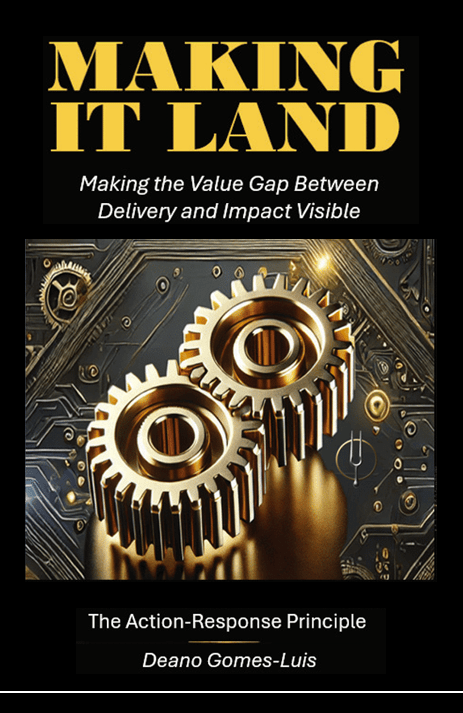
Making It Land
Making It Land puts the Action-Response Principle to work in four systems every organisation runs: staff appraisals, engagement surveys, customer journey mapping and short-term incentives. Each follows the Valley-Hill cycle and a five-phase implementation path, supported by real case studies, from hospital appraisals to retail click-and-collect, that show measurable results. It is written for the teams who have to make change stick.
Inside the book
Section 1 covers staff appraisals and engagement (Hill Systems 1 and 2), taking appraisals through a five-phase redesign. Section 2 applies ARP to customer journey mapping (Hill System 3), aligning every touchpoint with response data. Section 3 reshapes short-term incentives (Hill System 4) so bonuses reward outcomes rather than activity. The Epilogue links ARP to the Nine Word Strategy, and a glossary defines every term. Case studies throughout, such as a 33% reduction in complaints in retail, ground each step. Every tool referenced in the book is free to download from the Resources page.
THE COMPLETE GUIDE
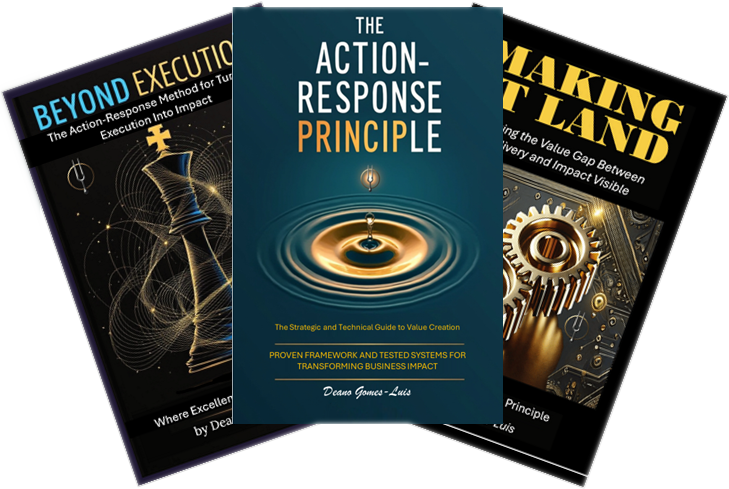
The Action-Response Principle
All three books together in one volume: the executive case, the strategic framework and the field guide, from first insight to full implementation.
ABOUT THE AUTHOR
Deano Gomes-Luis
Deano Gomes-Luis is a strategic adviser and transformation specialist with over 30 years of international experience delivering measurable business outcomes for executive teams in high-impact sectors. As Director and Principal Management Consultant at Operational Excellence Ltd, he partners with corporate senior leadership to drive operational excellence and sustainable competitive advantage.
With an MBA in Corporate Strategy, Corporate Finance, and Leadership from Bond University and a Graduate Diploma in Psychology, Deano blends strategic rigour with deep organisational insight. Certified in Lean Six Sigma and advanced methodologies, his approach delivers quantifiable improvements in performance, efficiency, and stakeholder value.
Deano has led transformational programmes across healthcare, higher education, government, energy, telecommunications, and hospitality, designing scalable operating models, modernising technology ecosystems, and conducting strategic reviews that delivered significant performance uplifts for industry leaders. Prior to consulting, he held executive and senior leadership roles in Information Technology Services, Energy and Telecommunications.
Based in Auckland, New Zealand, Deano serves as a non-executive director and actively mentors SME businesses across New Zealand. He continues to advise executive teams navigating complex operational challenges and shares his insights through thought leadership and advisory work.

